SMS Pendulum Systems
Amine Othmane, Chair of Systems Modeling and Simulation, Saarland University
What is it?
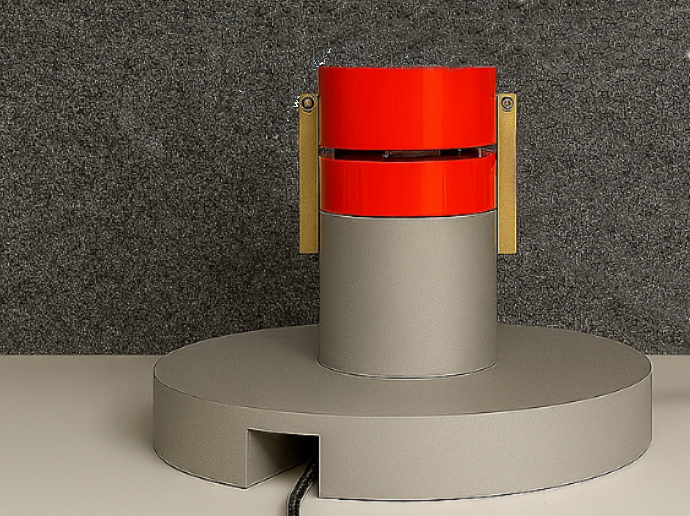
The SMS Pendulum Systems platform is a modular, open-source rotary inverted pendulum designed to serve simultaneously as a project-based teaching tool and a research-grade experimental testbed in systems and control engineering.
Commercial platforms offer closed hardware and software stacks that prevent student modification and limit research flexibility. This platform takes the opposite approach: every mechanical CAD file, electronic schematic, firmware module, and control software component is released as an open-source artefact under the MIT licence. The hardware is assembled entirely from commercially available, off-the-shelf components.
The platform grows with the user. Undergraduate students implement classical state-feedback and PID techniques on a real nonlinear system. Graduate students explore model predictive control, nonlinear methods, and system identification. Researchers deploy and benchmark state-of-the-art algorithms on hardware-grade equipment. Throughout, the same physical platform is used; the complexity scales by adding pendulum links, not by replacing hardware.
Key Features
| Feature | Detail |
|---|---|
| Licence | MIT (hardware, firmware, software) |
| Pendulum links | 1–2 in firmware; up to 4 mechanically |
| Outer control loop | 0.2–1 kHz |
| Motor drive (FOC) | ~10 kHz |
| Architecture | 4-layer modular stack, each layer independently replaceable |
Motivation
A recurring theme in recent strategic documents from the control community is that the rise of AI does not diminish the relevance of classical systems and control theory. If anything, the opposite holds. The CSS Road Map 2030 positions control engineering at the heart of societal-scale challenges, while the accompanying education roadmap makes the case that graduates who understand feedback, modelling, and systems thinking will be better equipped to deploy, govern, and reason about the autonomous systems that AI enables rather than being replaced by them.
Against this backdrop, hands-on experimental education becomes more important, not less. Introduced by Furuta, Yamakita & Kobayashi (1992), the rotary inverted pendulum has remained a reference problem in nonlinear control for three decades precisely because it packs rich, non-trivial dynamics (nonlinearity, underactuation, a non-trivial swing-up phase) into a compact, table-top device. Working with real hardware makes the gap between a textbook model and a physical system tangible: students encounter sensor noise, friction, communication delays, and real-time constraints in a way that no simulation can fully reproduce.
Most commercially available platforms of this type, however, come with closed source code and locked hardware, making it difficult or impossible for students to inspect, modify, or extend the underlying stack. The direct inspiration for this project is Ben Katz’s open-source Furuta pendulum [GitHub], which showed that building such a device from standard off-the-shelf parts is entirely feasible. The wider open-source motor-control ecosystem, including SimpleFOC and ODrive, confirms that high-quality BLDC drive software need not be proprietary. What remained missing was a platform that integrates all these elements (drive electronics, embedded control, mechanical design, and a structured educational programme) into a single, fully documented, open artefact.
Open Hardware & Software
All design artefacts will be made publicly available:
- Mechanical CAD files and assembly drawings
- Electronic schematics and bill of materials
- Firmware (Layer 1 FOC and Layer 2 outer loop)
- Supervisory control software
These artefacts will be released upon publication of an accompanying educational paper that discusses how this platform can be used efficiently for teaching and research.